
Curved & Circle Couches: Sizes, Layouts, Picks
Curved and circle couches use more floor space than straight sofas. The honest footprint math, layout rules that work, and measured picks across budgets.
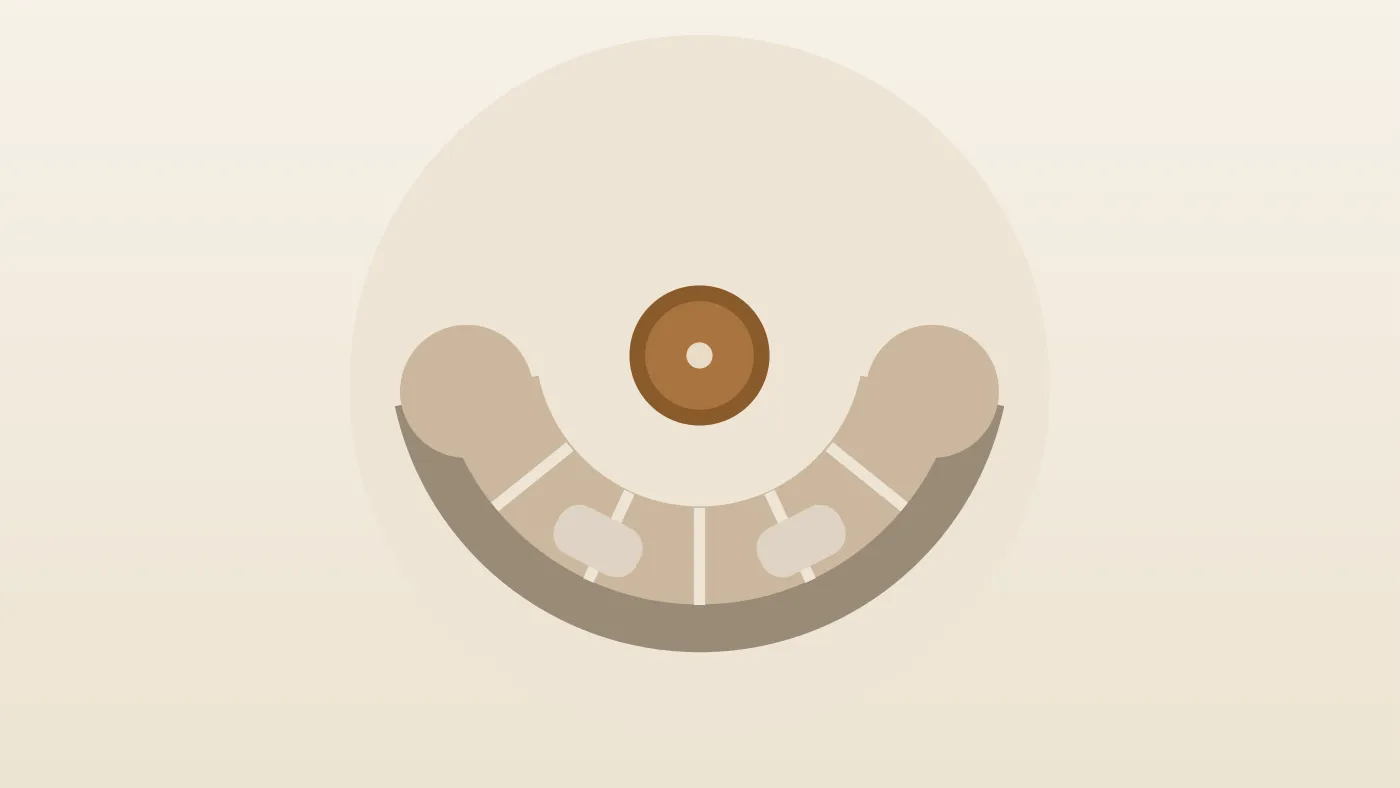
A curved couch trades floor space for shape — that is the whole deal, and most listings will not tell you. The arc cannot sit flush against a wall, needs walkway on both open sides, and points its seats inward rather than at the TV. Get the footprint math right and a curve is the best-looking thing in an open plan; get it wrong and it eats a small room. Here is the math, then the picks.
How much floor space does a curved couch really take?
Plan on roughly 50 percent more floor area than a straight sofa of the same width. The geometry: a straight 84-inch sofa at 36 inches deep occupies about 21 square feet flat against a wall. A curved sofa with the same 84-inch chord typically runs deeper through the center of the sweep, and because the arc cannot touch the wall, you float it about 18 inches out — so the planning rectangle becomes roughly 84 by 55 inches, call it 32 square feet, before any walkway.
Two numbers matter when you read listings. Chord width is the straight line between the sofa’s ends — use it to check wall and room fit. Arc length is the distance along the curve — use it to judge seating capacity, because a 94-inch chord can carry over 100 inches of actual seat. Large curved sectionals get genuinely huge: footprints around 107 by 106 inches show up in the category, which is a 10-foot square of your room. Tape the full footprint on the floor before you order — the sofa dimensions guide walks through the method.
What layouts actually work with a curved couch?
Float it — curved sofas work as islands, not wall furniture. The layouts that earn the footprint:
- Open-plan divider. The back of the curve faces the kitchen or entry and draws the room’s border better than any straight sectional. Keep 30–36 inches of walkway around the open sides.
- Conversation zone. Face the curve toward two chairs; the arc angles sitters toward each other. Allow about 18 inches between the inner curve and a round or kidney-shaped coffee table — straight-edged tables fight the arc.
- Corner placement. Angling the curve across a corner hides the dead space behind it and suits rooms too small to float furniture in the middle.
- The layout that fails: pushed against a flat wall in a rectangular room under about 12 feet wide. You lose the floor behind the arc and the walkway in front of it simultaneously.
TV-first households should pause here: a curve aims seats at each other, not the screen. End seats view the TV at an angle that gets old fast.
Which curved couches are worth buying?
West Elm Bacall Curved Sofa (74”–94”) — the mainstream default, sold in multiple widths with a kiln-dried hardwood frame and reversible cushions. The 74-inch version is one of the few curves that works in mid-size rooms. Expect a mid-to-upper four-figure spend depending on width and fabric; confirm current pricing.
West Elm Curved Modern Sofa (83.75”) — a tighter, lower-profile arc on a solid pine frame; the pick when you want the shape without a huge chord. Same caveat on pricing — West Elm moves prices with fabric grade.
West Elm Billy Cotton Curved Sofa (97”) — the designer-collab tier, with a kiln-dried frame and brushed aluminum legs, plus a 94.5-inch armless modular sibling that can build longer serpentine runs. Premium pricing.
Homary 4-piece curved sectionals (140”–146”) — the affordable route to a true “circle couch” look: four curved modules plus an ottoman forming a deep semicircle, in boucle or spill-resistant performance boucle. Ships boxed, assembles inside, and typically undercuts one-piece designer curves substantially. Import caveats apply — inspect fabric codes and reviews per listing, and since most ship in pale boucle, the survival rules in our cream couches guide apply from day one.
If what draws you to the shape is really the soft, sculptural roundness rather than the arc itself, compare the bubble couch trend before spending — it delivers the curves-in-photos effect in a modular box, with its own trade-offs.
Curved couch spec table
| Model | Chord width | Depth | Pieces | Price band |
|---|---|---|---|---|
| West Elm Bacall Curved | 74”–94” | Not published — check listing | One piece | $2,000–$4,000 (est.) |
| West Elm Curved Modern | 83.75” | Not published — check listing | One piece | $1,500–$3,000 (est.) |
| West Elm Billy Cotton Curved | 97” (94.5” armless modular) | Not published — check listing | One piece / modular | $3,000+ (est.) |
| Homary curved boucle sectional | ~146” assembled | Deep semicircle — check listing | 4 modules + ottoman | $2,000–$3,500 (est.) |
| Homary performance boucle curved | ~140” assembled | Deep semicircle — check listing | 4 modules | $2,000–$3,500 (est.) |
Depths on curved pieces vary along the arc, which is exactly why brands under-publish them. Ask support for the depth at the center of the curve and the true chord — then tape both.
Will a curved couch fit through your door?
Modular curves fit; one-piece curves are the gamble. Boxed sectionals like Homary’s clear a standard 32–36 inch doorway as cartons and assemble in place. A one-piece curved sofa is harder to deliver than a straight sofa of the same width, because the arc blocks the diagonal pivot that gets straight sofas through tight halls — there is no straight edge to stand it on.
Before ordering any one-piece curve, get the boxed or blanket-wrapped dimensions from the retailer, measure your narrowest door, hall, and stair turn, and run it through our Will It Fit tool. White-glove delivery does not repeal geometry; it just means someone else discovers the problem on your stairs.
Who should NOT buy a curved couch?
- Rooms under about 12 feet across. The float-plus-walkway math stops working; a straight sofa against the wall returns that floor to you.
- TV-first households. The arc points seats inward. If nightly viewing is the couch’s main job, a straight or L-shaped piece from our types of sectionals guide serves it better.
- Maximum-seats-per-dollar buyers. Curves cost more per usable seat than straight equivalents at every tier. An oversized straight couch delivers more lounging for less money and less floor.
- Frequent movers with one-piece curves. Every future doorway is a new negotiation. Modular curves dodge this; one-piece curves compound it.
Which curved couch should you buy?
Match the piece to the room, not the mood board. Open plan with floating space: the West Elm Bacall in the width your tape-out supports. Mid-size room that wants the shape quietly: the Curved Modern at 83.75 inches. Chasing the full circle-couch look on a real budget: a Homary four-piece semicircle, boxed delivery included. And if the tape-out says the floor is not there, take the win now — a great straight sofa beats a cramped curve in every room it actually fits.
Frequently asked questions
Quick answers to what buyers ask us most
What is the difference between a curved couch and a circle couch?
A curved couch is a single sofa with a gentle arc — typically 74 to 110 inches along the chord. A circle couch is really a semicircle or near-full-circle sectional built from curved modular pieces, usually 130 inches and up, like Homary's 140–146 inch four-piece sectionals. True full-circle one-piece sofas are rare outside custom and vintage conversation pits.
How much space do you need for a curved sofa?
Plan the sofa's chord width by its depth plus an 18-inch gap behind the curve, then keep 30–36 inches of walkway on the open sides and about 18 inches between the inner curve and a coffee table. In practice a modest 84-inch curved sofa wants a room at least 12 feet across; large curved sectionals with footprints near 107 by 106 inches want considerably more.
Can a curved couch go against a wall?
Not flush. The arc means only the center or the two ends touch, leaving a dead triangle of unusable floor behind the sofa. Designers treat curved sofas as floating pieces — centered in open plans, angled across corners, or paired with a console behind the back. If your layout depends on a wall-hugging sofa, a straight or L-shaped piece uses the room better.
Do curved couches fit through doorways?
Modular curved sectionals ship boxed and assemble inside, so they clear standard 32–36 inch doors easily. One-piece curved sofas are the risk: the arc prevents the diagonal pivot movers use on straight sofas, so a 94-inch one-piece curve can fail a hallway a same-width straight sofa passes. Check boxed carton sizes and run your measurements through our Will It Fit tool.