
Jackknife Sofas for RVs: Sizes & Replacement Picks
RV jackknife sofa sizes decoded: 60, 62, 68 and 72-inch widths, how the fold-flat mechanism works, and replacement picks light enough for a camper.
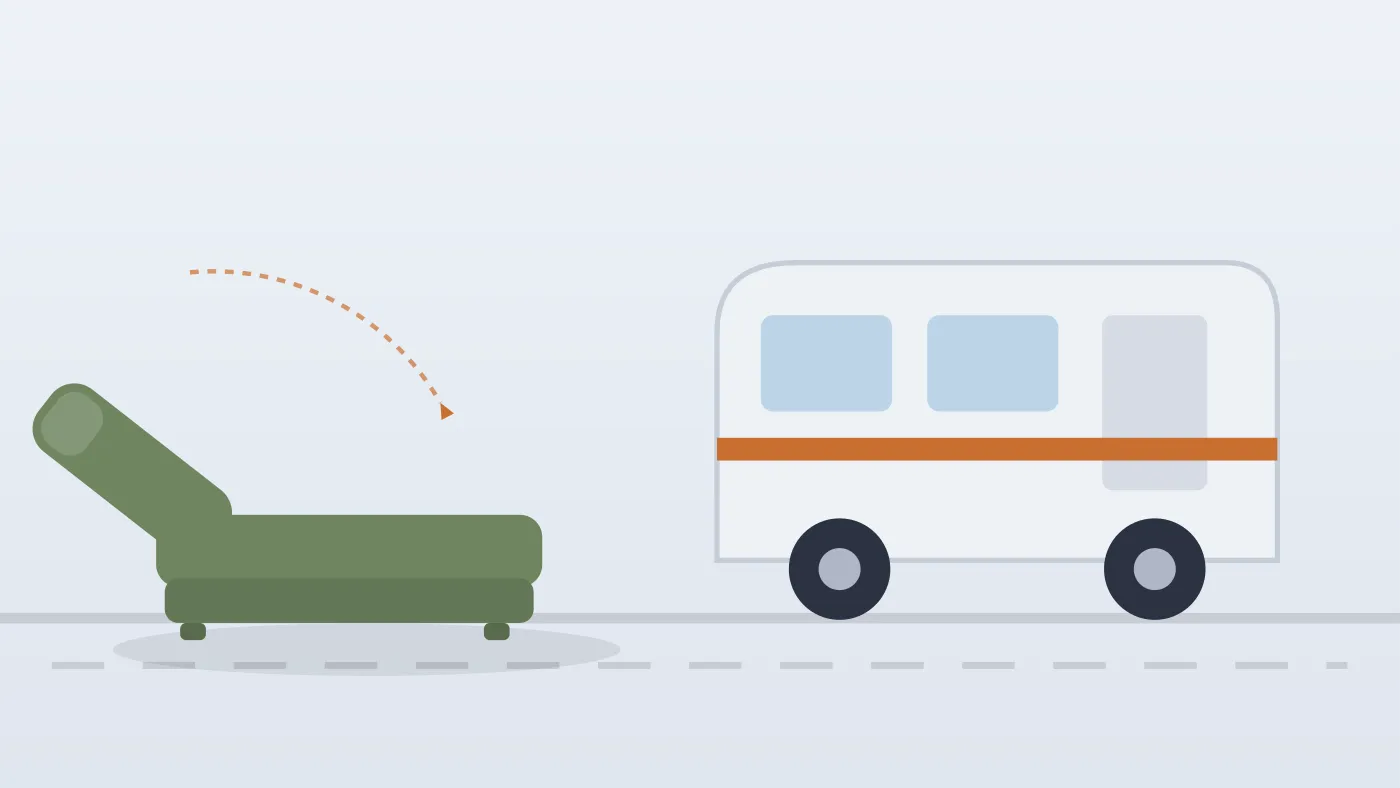
Shopping for a jackknife sofa is a measuring job before it is a furniture decision. RV builders install these couches in a handful of standard widths — roughly 60, 62, 68, and 72 inches — so the replacement market is organized around the same steps. Get three numbers right (wall span, open depth, door width) and the rest is picking a fabric.
How does a jackknife sofa work?
A jackknife sofa folds flat the way the name suggests: the seat and back scissor open into one flat surface. You lift the front edge of the seat, pull it toward you, and push the whole assembly down until seat and backrest lie level. Closing it is the same motion reversed, and either direction takes under a minute.
There is no folding steel frame, no separate mattress, and no cushions to store. That simplicity is the entire appeal — fewer parts to rattle loose on washboard roads, and far less weight than a residential-style pull-out mechanism.
The trade-off is the sleep surface. You are sleeping on upholstered bench cushions with a seam down the middle, not on a mattress, which is why the format suits guest duty and weekend trips better than nightly use.
What sizes do RV jackknife sofas come in?
Replacement jackknife sofas cluster at nominal widths of 60, 62, 68, and 72 inches, with open depths around 42 to 44 inches. The bed runs parallel to the wall, so the sofa’s width becomes the bed’s length — a 62-inch sofa yields a sleeping surface about 59 inches long, closer to a generous loveseat than a bed for a tall adult.
| Model | Nominal width | Closed size (W×D×H) | Open depth | Listed weight |
|---|---|---|---|---|
| RecPro Charles 60” | 60 in | verify current listing | ~42 in | ~100–115 lb |
| RecPro Charles 62” | 62 in | 62 × 30 × 34 in | ~42 in | ~100–115 lb |
| RecPro Charles 68” | 68 in | 67.25 × 30.5 × 36 in | ~44 in | ~115 lb |
| Thomas Payne 62” (Altoona) | 62 in | verify current listing | ~42–44 in | under ~140 lb |
| Thomas Payne 68” (Grummond) | 68 in | verify current listing | ~42–44 in | under ~140 lb |
| Thomas Payne 72” (Millbrae) | 72 in | verify current listing | ~42–44 in | under ~140 lb |
Treat every nominal number as a label, not a measurement. The 68-inch RecPro actually measures 67.25 inches wide, and that kind of variance is normal across the category.
What should you measure before ordering a replacement?
Measure the wall span, the open-position clearance, and the entry door — in that order. The wall span sets your nominal size: leave an inch or two of breathing room rather than wedging a 68-inch sofa into a 68-inch alcove.
Open clearance is the one people miss. The sofa needs 42 to 44 inches of floor depth when folded flat, and if it rides in a slide-out, the closed sofa also has to clear the interior cabinetry when the slide comes in. Run a tape measure through both positions before you order, the same way our sofa dimensions guide walks through doorway math for houses.
The entry door is why RV furniture ships the way it does. RV doors commonly run somewhere around 24 to 30 inches wide — far narrower than a house door — so replacement sofas arrive with backrests detached and bases boxed separately.
Mounting is simpler than it looks. Most jackknife sofas bolt to the factory platform with a few lag screws, and if your rig has no platform, universal leg kits let the sofa stand on the floor like household furniture.
Which jackknife sofas are worth buying?
RecPro Charles 68” — the default recommendation. Published specs are unusually complete for RV furniture (67.25 × 30.5 × 36 inches closed, 18.75-inch seat height, about 115 pounds), it opens to roughly 44 inches, and it comes in cloth and faux-leather covers. Expect the $800–$1,200 band.
RecPro Charles 62” — the same build for tighter walls and slide-outs, with a sleeping surface around 59 × 42 inches. The 60-inch version covers the narrowest factory alcoves. Both typically land under $1,100.
Thomas Payne 68” (Grummond) — the OEM-match pick, since Thomas Payne furniture ships in a large share of new trailers. The 68-inch model adds a fold-down center console with cupholders, wipe-clean PolyHyde upholstery over high-density foam, and an included kickboard. Typically $800–$1,300.
Thomas Payne 72” (Millbrae) — the widest standard step, sized for fifth wheels and larger travel trailers with a full-length sofa wall. Same fold-flat hardware; budget toward the top of the band.
Store-brand alternatives exist — Camping World sells a house-label jackknife sofa — and they can be fine buys, but compare published dimensions and weight line by line before saving the difference.
Why does sofa weight matter in an RV?
Every pound of furniture subtracts from your cargo carrying capacity — the hard limit covering gear, water, and passengers. A jackknife sofa at 100 to 140 pounds is one of the lightest ways to seat three and sleep two; residential-style sleepers with steel mechanisms can weigh roughly double, and that difference comes straight out of what else you can load.
Placement matters too. A sofa mounted in a slide-out adds weight the slide motor and rails have to move every time you set camp, which is another reason RV builders standardized on this light, simple mechanism instead of home-style hardware.
Who should NOT buy a jackknife sofa?
- Full-timers using it as the primary bed. The folded bench is firm, seamed, and 42 to 44 inches deep. If someone sleeps on it nightly, an RV hide-a-bed — the closest thing to the residential mechanisms in our sleeper sofa guide — is worth the weight penalty.
- Tall sleepers. On a 60- or 62-inch sofa the sleeping surface runs under five feet along the wall. Six-footers should shop the 68- and 72-inch steps or plan to sleep diagonally.
- Anyone furnishing a house, not an RV. Jackknife hardware exists to save weight, and nothing about it improves a living room. At home, a murphy bed with a couch delivers a real mattress from a similar footprint, and a true king sleeper or oversized sleeper exists if you want maximum bed from a sofa.
- Buyers who won’t measure. Nominal sizes, slide-out clearances, and door widths sink more replacements than fabric choices ever will.
- Plush-lounge seekers. The bench foam is chosen to survive folding flat, not to feel like a pillow-top. Expect firm.
For guest sleeping at home on a similar budget, a daybed with a proper twin mattress beats a jackknife on comfort every time — our daybed mattress guide covers the sizes and thickness limits that make one work as a couch.
Frequently asked questions
Quick answers to what buyers ask us most
Are jackknife sofa sizes standard across brands?
Mostly. The industry clusters around nominal widths of 60, 62, 68, and 72 inches, and both RecPro and Thomas Payne sell into those steps. But nominal hides real variance — a 68-inch model may measure 67.25 inches — and closed depth and height differ brand to brand. Match your replacement to the measured wall span and slide-out depth, not to the size printed on the old sofa's paperwork.
Can one person install a jackknife sofa?
Usually with a helper, sometimes alone. Most jackknife sofas arrive with the backrest detached so boxes fit through an RV entry door, and the bases mount with a handful of lag screws into the factory platform. The awkward part is carrying a 100-plus-pound base up RV steps, not the hardware. If your RV has no platform, universal leg kits let the sofa stand on the floor instead.
Is a jackknife sofa comfortable to sleep on every night?
It is the firmest, flattest compromise in RV furniture — fine for weekends, tiring for full-timers. The bed is a bench seat folded flat, so you sleep on seams, and open depths of roughly 42 to 44 inches make it narrower than a residential full mattress. Nightly sleepers usually add a folding foam topper. If the couch is the primary bed, consider a true RV hide-a-bed instead.
What is the difference between a jackknife sofa and an RV hide-a-bed?
A jackknife sofa folds its own cushions flat in one motion — no separate mattress, minimal hardware, low weight. A hide-a-bed hides a folding metal frame and thin mattress inside the couch, like the residential sleepers in our sleeper sofa guide. The hide-a-bed sleeps flatter and longer but weighs substantially more, which matters against an RV's cargo capacity. Jackknife wins on weight and simplicity; hide-a-bed wins on sleep quality.